


Loanch sole shareholder
Loanch was founded by Nik Sinickis, a Latvian engineer who used to invest in crowdlending before launching his own platform in 2022. But as early as 2024, as mentioned on their blog, it was planned that Loanch would join the Fingular ecosystem, the Singaporean parent company of the loan originators listed on the platform.
The company FINGULAR PTE. LTD. (UEN 202135807C), created in October 2021, is co-owned by Maxim Chernushchenko, a Fintech entrepreneur who founded Cashwagon on Mintos, and Vladimir Gurinov, founder of JSC Cordiant and Service-Telecom. Yet it is Fingular’s risk advisor, Przemek Januszaniec, who acquired Loanch and migrated the platform to Croatia.
Przemyslaw (Przemek) Januszaniec is a Polish national who graduated in economics and statistics from Nicolaus Copernicus University and specialized in risk and credit management. Based in Asia, he is also the managing director of Flow, a credit management company founded in 2016 and based in Singapore.
Management team
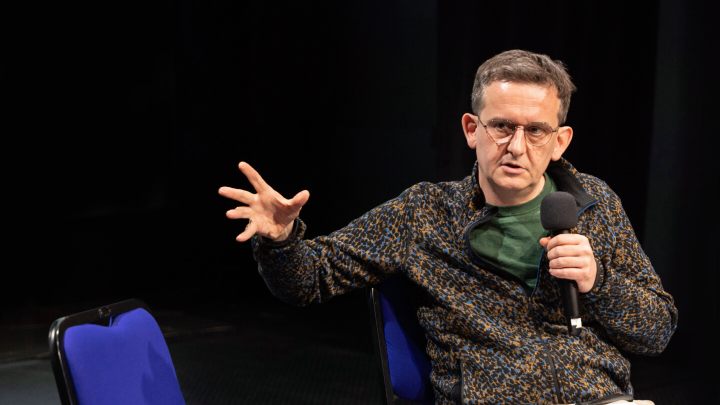
Following his acquisition of Loanch, in addition to being the sole new shareholder, Przemek took over the role of CEO, previously held by founder Nik Sinickis, who became Product Manager. In parallel, he recruited Petar Brkić as CFO while keeping Jakub Cernik as Chief Operating Officer.
Petar Brkić is a Croatian national who graduated in economics from the University of Split and spent his career in the world of finance. He has also served as advisor, member, and chairman of several boards of directors in Croatian investment companies. He took up the position of CFO at Loanch in March 2026.
To support him, Jakub Cernik, Chief Operating Officer, is responsible for developing growth and profitability strategies. He also oversees the integration of Loanch into the Fingular ecosystem, where he served as country manager for 3 years. Jakub is a Certified Anti-Money Laundering Specialist (ACAMS) who previously worked for PayPal and Western Union.

Loanch statistics | June 2026
Here are some statistics for the current year:
- Total funds invested : 95.4 M€
- Total interests paid to investors : 1,52 M€
- Average annual return : 14.78 %
- Number of investors : +15,250
The platform activity really started in 2024 with a few hundred thousand euros to reach 1 million euros at the beginning of 2025. In the second quarter of 2025, its monthly funding volume exceeded 5 million euros. Loanch started 2026 with its highest monthly amount of funds invested at 7.5 million euros.
Although little known to the general public, the platform has already raised over 65 million euros in capital. It attracts experienced investors who seek to diversify into Asian markets and benefit from high returns, well above established high-yield platforms such as Swaper.

How does Loanch work ?
Loanch is a peer-to-peer (P2P) lending platform where Asian companies, from Malaysia and Indonesia, also called “loan originators” offer to invest on their side in lending activities. Investors, either individuals or companies, invest some capital under predefined conditions and in return receive interests as instalment payments at a certain rate.

Loanch is a P2P marketplace
The loan originators provide loans to borrowers in the country where they operate and receive in return interest payments. Therefore, as their business model depends on the capital they can leverage to generate profit, they search for additional funding to invest in loans and grow on the lending market.
These loan originators list their investment opportunities on Loanch marketplace, which in return ask for a commission. No fees are charged to investors. The P2P platform plays the role of intermediary with the potential investors, and ensure that all financial and legal conditions are transparent and duly respected by both parties (Like PeerBerry).
The Investors select the loans that fit their investment strategy according to their own criteria in terms of amount, term, and rate among others. They receive payments of interests from the loan originators every month that they can withdraw or reinvest. All loans are denominated in euros, and the exchange rate risk is borne by the platform.

Chronology of Loanch investments
On Loanch, the minimum amount from which investors can start investing in consumer loans is of 10€ for periods with durations ranging from 1 to 4 months. Interest rates offered go up to 15.5%, and interest payments are transferred to investors on a monthly basis.
For 30-day loans, principal and interests are paid all together when the loan reaches its maturity. Over this term, investors receive monthly instalments corresponding to interest payments while the principal is repaid on completion of the term as indicated in the loan spreadsheet.
Although investments are on a short-term basis, they also can be extended by the loan originator as indicated in the User Agreement. For investors who wish to terminate their investments before its term, they don’t have yet the possibility to sell them on the secondary market.


What do we invest in ?
With the Loanch P2P platform, individuals invest alongside lending companies in personal loans taken out by individuals from Malaysia. Loan products provided are short-term consumer credits, home improvement loans, funds for unexpected expenses, as well as Buy Now, Pay Later (BNPL) receivables.
Through the platform, investors purchase a claim right arising from a loan agreement and receive interest in accordance with the terms and conditions of the Assignment Agreement associated to the loan.
Active loan originators are Tambadana and AhaPay, both based in Malaysia. AhaPay operates in the Buy Now, Pay Later market with returns of up to 11%. Ammana (Indonesia) was also listed but its new loans have been temporarily paused since March 2026. All are part of the Singaporean holding company Fingular.

Registration process
To register on Loanch, investors simply need to complete the identity verification process by uploading a clear and legible copy of their national ID card or passport and taking a selfie. This Know Your Customer (KYC) process is performed fully online by Veriff and takes only a few minutes.
To add funds to their platform account, investors need a bank account in their name from any country in the European Economic Area (EEA). Once the first deposit is made, the bank account is automatically registered and can be used for withdrawals (minimum set at 50 €), processed within 3 business days.
Loanch offers several ways to boost investment returns. New investors benefit from a 1% cashback on all investments made within the first 90 days since registration. In addition, the platform provides a loyalty program with 6 levels based on the investor’s current portfolio :
- Iron : +0.25% from 3,000 € invested
- Bronze : +0.50% from 5,000 € invested
- Silver : +0.75% from 10,000 € invested
- Gold : +1.00% from 20,000 € invested
- Platinum : +1.25% from 50,000 € invested
- Diamond : +1.50% from 80,000 € invested

Is it safe to invest on Loanch ?
Pros to investing on Loanch
Loanch is positioned on growing markets
In the P2P lending landscape, Asia looks like the Eldorado for many platforms, but to operate in this region is not so easy as one may think. Indeed, Twino and Viainvest had to suspend the lending operations of their joint venture in Vietnam and the Philippines in April 2024 because of the local legislation.
Nevertheless, Loanch is positioned in two countries with fast growing economies according to the Worldbank : Indonesia and Malaysia. And even though gross domestic product in Sri Lanka is decreasing, this does not prevent platforms like Peerberry to successfully offer loans from that country regularly.
If we look at the most promising market, Indonesia, one may notice their fast-growing peer-to-peer lending industry. Additionally, as noted by the Fitch Agency, the recent regulation by the Financial Services Authority’s (Circular Letter No. 19 of 2023) introducing risk management procedures is creating greater incentives for sectoral consolidation.

Above-market returns
To differentiate itself from competitors, the platform offers above-market returns (up to 15.5%) without being outrageously high. This is a positive sign that the company is seeking to find a balance between a sustainable business model and attractive returns for investors.
Although Loanch is quite recent, loan originators have been operating in their respective countries for several years. This means that they have carefully evaluated the returns that may be offered before offering them on the platform.
Loanch regularly shares the top of our best P2P lending returns ranking with platforms like Hive5 which offer similar rates, and even surpasses them regularly thanks to its cashback campaigns. Nevertheless, the platform should ensure that such returns do not jeopardize the sustainability of its business model.

30-day Buyback obligation
The two loan originators systematically include a buyback obligation to each loan investment listed. This means that in case of delayed payment, the loan originator has the obligation to buy back the loan, repaying the principal, and all the associated interests including for the period of delay.
A buyback obligation is always appealing as it guarantees the revenue generated by our investments, but investors need to remind that this guarantee is as strong as the loan originator. For reference, Tambadana reports a default rate of 6%.
The details of this buyback obligation are duly specified in the assignment agreement associated to each loan investment. A specific characteristic is that the obligation kicks in after only 30 days, exactly like Robocash, when most platforms activate the guarantee only after 60 days.

Cons to investing on Loanch
Loanch is not regulated
Although being located in Europe, Loanch is not regulated considering that Croatian government does not impose a specific regulation on P2P lending platforms. As a consequence, investors can be reluctant to invest through a company that does not need to refer to a regulatory authority to manage their business activities.
This being said, several P2P platforms, like Robocash and Peerberry, are not regulated but they benefit from their long experience and solid trust from investors. Moreover, Loanch maintains segregated accounts for investor funds, separate from operational funds.
More importantly, investors should focus on the other criteria to decide where to invest. Indeed, a regulated platform like Mintos, although being duly regulated, has a very long track record of default payments on a large number of loan originators, showing a complete lack of due diligence.

Fingular cumbersome track record 
Before founding Fingular, Maxim Chernuschenko, was CEO of Cashwagon PTE. LTD. Between 2017 and 2020, a Singaporean holding specialized in retail credit business in Asia. Yet, Cashwagon is known by investors on Mintos as some of their subsidiaries were listed as loan originators.
But the 3 loan originators under Cashwagon brand, Green Money Tree Lending Corp. (Philippines), PEERMAN PTE. LTD. (Indonesia), and Lendtech Co., Ltd. (Vietnam) all defaulted during the Covid-19 pandemic in 2020 for a total amount of 6,94 M€. Mintos definitively wrote off these claims, confirming a total loss for investors.
Some P2P investors point the responsibility of Cashwagon CEO while others claim that the shutdown by local authorities in Vietnam could not be avoided. Maybe both are right : the situation in one country (Vietnam) cannot explain defaults in other countries, especially in Indonesia where Fingular operates.

Loan originators not (yet) profitable
At the time of their takeover by the Fingular group in 2023, the two main loan originators were loss-making. Ammana has not managed to turn the situation around, with 3.74 M€ in losses and negative equity in 2023, and no new loans have been listed on the platform since its withdrawal in March 2026.
In the case of Tambadana (Malaysia), Fingular Group acquired their licence in 2023 to transition to an online activity. Financial results have improved remarkably, with a profit of 1.9 M€ in 2025 and equity representing 20.4% of total assets. Loan loss provisions nevertheless still absorb 41.6% of revenue.
As for AhaPay, which joined the platform in 2026, it posted 824 K€ in losses for its first financial year in 2025. Its loan supply also remains very limited, so that almost all new investments are now concentrated on Tambadana, which reduces diversification for investors.

Lack of a group guarantee
Loan originators listed, as well as expected ones, are all part of the same group under the holding Fingular PTE. LTD, meaning that all their subsidiaries are under the same umbrella. If their management want to re-build trust, adding a legally binding group guarantee would be a positive sign.
All controversies around such a group guarantee offered by Peerberry disappeared the day Aventus group started to reimburse loans affected by war under management of Ukrainian and Russian loan originators.
Although this is not a magical solution, offering a group guarantee for Fingular loan originators would make sense. Actually, there is a small sign of it in their FAQ but still not clear: “Buyback obligation and additional Group guarantee may be affected in case of a force majeure event“.
Opinion on Loanch
Loanch offers much higher interest rates to investors compared to their competitors in the P2P landscape. They operate in Asian countries with economies developing at fast pace where online solutions for personal micro-lending are growing rapidly, especially thanks to smartphones.
Like for most platforms, investors are covered by a buyback guarantee which is shorter (30 days) than their P2P competitors, making investments much more liquid with a maximum period of 30+30=60 days for the shortest loans.
Nevertheless, both the platform and the lending group Fingular remain quite young at that date. More experienced, the Asian loan originators are nonetheless in a delicate financial situation that needs to be seriously consolidated, which Fingular committed to do as holding company.

Moreover, despite Fingular’s presence in India and Sri Lanka, investors only have access to loans from Indonesia and Malaysia on the platform (Sri Lanka was announced several months ago). As a result, the level of geographic diversification remains unsatisfactory for the moment.
Loanch should accelerate the onboarding of more lending companies from the Fingular group and offer investors a group guarantee. But the platform should also seriously consider including loan originators with no connection to Fingular, in order to diversify and boost investor trust.
Indeed, the Founder & CEO of Fingular cannot distance himself from his past as Founder & CEO of Cashwagon (listed on Mintos until 2020). For investors, this is clearly a negative signal, all the more so as communication on this subject is non-existent on Mintos and the recovery of funds is at a standstill.

In addition, a plan for Fingular to take control of Loanch was already in place well before its launch in 2022, without investors having been informed. What was initially presented as an equity stake turned into a full takeover, with Fingular’s own risk advisor acquiring the platform and becoming its sole shareholder and CEO.
In fact, as early as May 2022, Fingular patented the Loanch trademark as part of these plans, while RiseTech (the business entity originally behind Loanch) was established only in December 2022.
In a P2P market requiring trust and stability, Loanch has yet to demonstrate both. Mid-2023, they even had discussions to abandon the project after a review of the platform’s performance judged unsatisfactory. There’s still a long way to go to build a solid, sustainable platform.